Phone: +86-755-2357-1819 Mobile: +86-185-7640-5228 Email: sales@ominipcba.com whatsapp: +8618576405228

Beyond the Board: A Sourcing Expert’s Guide to Box Build Assembly
Master the final stage of manufacturing with our guide to Box Build Assembly. Learn how to navigate China PCBA assembly, from wire harnesses to Functional Testing (FCT)
PCB TECHNOLOGYPCB MANUFACTURINGPCB ASSEMBLY
OminiPCBA
12/16/20253 min read

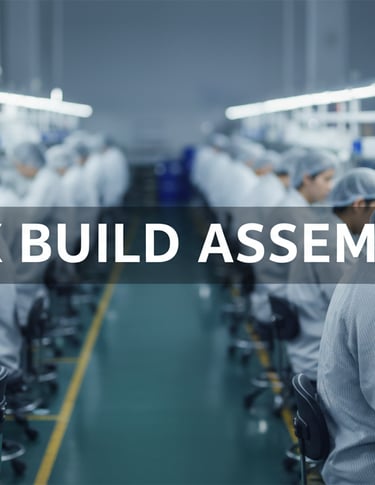
In the heart of the Shenzhen and Dongguan manufacturing corridors, experience teaches a quiet but vital lesson: a project is never truly successful until the final "snap" of the enclosure. You can spend months perfecting high-density interconnects or complex rigid-flex PCB layouts, but if the final assembly is flawed, the engineering counts for nothing.
At OminiPCBA, we understand that moving from a populated board to a retail-ready product—Box Build Assembly or System Integration—requires a shift from robotic precision to meticulous human craftsmanship.
The Essentials of Seamless Box Build Assembly
When partnering with a PCBA manufacturer in China, the transition from components to a finished system demands a proactive strategy. Our approach is built on decades of floor-level experience, focusing on five critical phases to ensure your product hits the market without delays.
1. The Extended Bill of Materials (BOM)
A standard PCBA BOM covers what’s on the board. A Box Build BOM covers everything else. Delays rarely stem from high-value processors; they are caused by a missing M2 screw, a specific foam gasket, or an unbranded zip tie.
Granular Tracking: We manage every secondary item, including adhesives, spacers, labels, and specialized retail packaging.
Local Sourcing: By sourcing mechanical parts within a 50km radius of our facility, we eliminate the logistics bottlenecks that stall production.
2. Precision Wire Harnessing and Routing
Even in an SMT-dominated world, system integration relies heavily on manual interconnects. Poor cable management is a leading cause of field failures.
Mechanical Stress: We validate every cable bend radius to prevent fatigue at solder joints.
Thermal Management: Our technicians ensure "service loops" and wiring do not obstruct airflow or cooling fans.
Signal Integrity: We implement strict physical separation between AC power lines and sensitive analog signals to prevent EMI/EMC interference.
3. PCBA to Enclosure Integration
This is where mechanical tolerances meet electrical design.
Rigid-Flex Support: For wearables and compact IoT devices, we use custom 3D-printed jigs and fixtures (based on your STEP files) to support bendable sections during assembly. This prevents micro-cracking in copper traces when the board is secured into the housing.
Material Compatibility: Whether working with standard FR4 or specialized substrates, we ensure the mounting hardware provides a stress-free fit.
4. Advanced Functional Testing (FCT) and Quality Control
Once a device is sealed in its enclosure, traditional AOI (Automated Optical Inspection) is no longer an option. We shift to comprehensive Functional Testing to guarantee performance:
Burn-In Testing: Units undergo thermal stress for 24–48 hours to identify "infant mortality" failures before they ship.
Full Functional Validation: We load firmware, toggle physical switches, and calibrate sensors to ensure the device performs exactly as intended.
Electrical Safety: For high-voltage electronics, we perform Hi-Pot (Dielectric Withstand) and Ground Bond testing to ensure user safety and regulatory compliance.
5. The China Advantage: Integrated Logistics
OminiPCBA leverages the "China Edge" to streamline your supply chain. By integrating molding, metalwork, assembly, and fulfillment in one region, we provide:
Direct-to-Customer Shipping: We handle final packaging, user manuals, and kitting, shipping directly to your global hubs or end customers.
Reduced Carbon Footprint: Fewer transit steps between component suppliers and the assembly line mean lower costs and a more sustainable production cycle.
Partner with OminiPCBA for Full System Integration
Taking a product from a bare circuit board to a store shelf is a complex dance of logistics and labor. OminiPCBA acts as your on-the-ground collaborator in China, managing the intricacies of sourcing, assembly, and global distribution.
Whether you are launching a complex electromechanical device or a sleek consumer electronic, we provide the precision and transparency needed to scale your production.
Ready to move beyond the board? Contact OminiPCBA for a comprehensive Box Build quote today.
Related Articles
Contacts
Email: sales@ominipcba.com
Mobile: +86-185-7640-5228
Copyright © 2007-2026. Omini Electronics Limited. All rights reserved.
Head Office: +86-755-2357-1819
Services


Your China turnkey partner for electronics manufacturing. We bridge design to delivery by leveraging the Shenzhen electronics ecosystem for precision engineering and streamlined PCBA supply chain logistics.
Ready to Build?
Get a comprehensive quote within 24 hours.